

Port Phillip Matters
Time for A Rates Reduction
Author: Rod (St Kilda Resident)
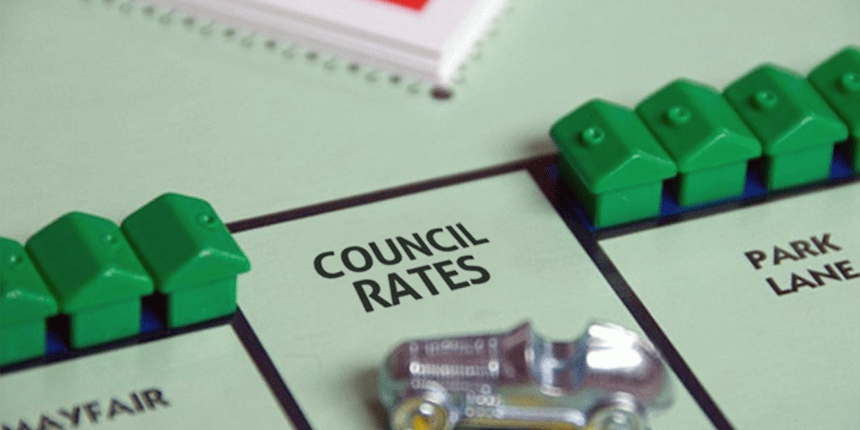
Will Councillors be acting in the best interests of residents and business owners when they vote for increased rates and charges at a Council Meeting on 29 June?
Council have embarked on a tax and spend agenda without due consideration to ratepayers. We have witnessed total revenue from rates and charges increase more than inflation. At the same time, the CoPP is mired in poor performance, as shown in community satisfaction surveys. Increasing revenue and expenditure levels does not necessarily equate to higher performance or residence satisfaction.
Too much of our council revenue is not being optimised by an oversized and top-heavy bureaucracy. Even worse is the amount spent on consultants and their reports as well as on non-core council functions.
We know that we as a community are doing it tough. Money does not stretch the way it did a few years ago, with household budgets being stretched by global fuel shortages impacting the cost of food and other basics of life. This article outlines why you as a ratepayer or renter need a break from council largesse paid for on the back of our hard-earned money.
Iranian War a Catalyst for Economic Downturn
The war in the Middle East, the impact on fuel and fertiliser prices and flow on to food prices, should jolt any sensible Councillor into the fact that now is not the time for a full rate increase to residents.
In a very short time, the world economy appears to be returning to a rerun of the oil shocks of 1973 which led to stagflation through increases in oil prices by 300%, high inflation and recessions in many parts of the industrialised West. We in Australia are so reliant on imports and have been caught unprepared in this emerging economic crisis.
Already the response from the private sector has been either delays in employing staff and / or reduced hours or layoffs. To the consumer, the prices of staples, including fruit, vegetables, milk and meat are rising as retailers are forced to pass on the rising costs of fuel – whether it be caused by transportation cost increases or additional costs in agricultural production.
Of great concern is the supply and price of diesel and fertiliser (all largely import related) meaning that we now are staring down the barrel of low crop output as many farmers will either not plant or face lower yields over the next year. This means increased demand on reduced food production in the seasons to come. The result is that most consumers are now expecting a 20% plus increase in basic staples costs over the coming months and who can predict the flow-on effect through inflationary expectations?
And even if the war was to end tomorrow, our world will not be “business as usual” with a reset to the low inflationary environment of a few years back.
Whether an Owner Occupier, Investor or Renter – Life is Getting Tougher.
In 2025, Victorian housing rents reached on average $580 per week by September, a 3.5% annual increase; in 2024 there was an 8% annual increase. Since 2020, housing affordability has declined by 35%. Reasons include:
- Low Vacancy Rates:Supply factors leading to consistently low vacancy rates, often at or below 1.5%, have kept demand high. In regard to supply Issues, rental stock has struggled to keep up with demand, partly due to investors leaving the market and others being cautious about increasing government imposts in the form of taxes, increase in mandatory requirements and stronger renter provisions.
- Population Growth:Net overseas migration added significant demand for rentals. Of total net immigrants, over 30% choose Melbourne as their new home. This equated to 112,000 new immigrants in 2023 and 81,168 net new immigrants in 2025. In the absence of a strong recovery in housing construction, rents will continue to rise.
For owner-occupiers in the CoPP, we already pay much higher comparable rates than the adjoining councils of Stonnington, Glen Irea and Bayside.
State Taxes and Charges Have Gone Sky High
Over the last decade state taxes have gone sky high affecting living standards for rate payers. This staggering tax grab includes 54 new or raised taxes including:
- A new stamp duty on off-the-plan purchasers (2017-18).
- Widening of vacant residential land tax to uninhabitable properties (2019-20).
- A new annual property valuation to increase land tax.
- Increased land tax for homes with contiguous blocks on a separate title (2019-20)
- A new tax on Uber and taxi fares. (2016-17 Update).
- Increased absentee landowner surcharge for foreign-owned property (2019-20).
- Increase to the Municipal and Industrial Landfill Levy (‘bin tax’).
- A new affordable housing tax (windfall gain tax on rezoned land).
- Increased land tax on taxable landholdings above $1.8 million.
- Increased stamp duty on property transactions.
- Increased Fire Services Property Levy (2021-22).
- Land tax on landholdings between $50,000 to $300,000 (Rent Tax).
- A new school tax on independent schools (Schools Tax) (2023-24).Holiday and Tourism Tax (2023-24).
- Expanded land tax on vacant residential land (Holiday House Tax) (2023-24).
- Expanded land tax on unimproved residential land (2023-24).
And of course, these tax imposts mean a flow on to higher rental costs.
Utility Prices Continuing Upward
In the 12 months to November 2025, electricity prices have increased 15.5% and gas is up by4.3%, both well higher than the inflation rate. Higher utility prices have caused a spike in electricity default (arrears) notices by 23% with average debt levels for hardship cases reaching $2,390 per customer.
National Debt Helpline Under Siege
In the last three months the National Debt Help line has received a 15% jump in calls from people having increased difficulty in juggling mortgage or rent payments, utility bills, tax and personal debts as well as credit cards. This coincides with recent (April) ANZ/Roy Morgan Consumer Confidence survey and the PWC Voice of the Consumer survey where Australian consumer confidence remains near historic lows due to cost-of-living pressures, with 60% of households feeling “worse off” financially. High inflation has driven 90% of consumers to adopt deal-seeking behaviours, while 55% report feeling financially insecure.
Interest Rates Heading Further North
The increase in state and federal borrowings and corresponding increase in federal and state expenditure is putting the heat on interest rates. So much so, that it is stymying Reserve Bank attempts to manage inflation within the current policy band of 2-3%. Bond market indicators along with economic commentators allude to higher interest rates over 2026. In May 2026, the Reserve Bank raised the official cash rate to 4.35%, driven by this stubbornly high inflation with economists predicting at least two more hikes this year. As a result, we are already seeing households experiencing increased mortgage stress along with slowing economic growth.
This mortgage stress started its rally in May 2022 when the RBA increased interest rates by 25 percentage points to 0.35%, and then over the past two years has compounded with a further 16 RBA rate increases and a meagre 2 rate decreases, with the current official RBA interest rate in May 2026 rising to 4.35%. (https://australianpolitics.com/topics/rba/interest-rates-since-1990/). On top of this, property values are increasing in some areas and falling in others but the demand driven by internal or external population needs is still there.
Summary
In light of the falling living standards on the back of the:
- Iranian war;
- High cost of rental accommodation;
- Increasing cost pressures for household staples and utilities;
- Increased myriad state taxes and their effect on economic growth and investment, and
- Interests rate pressures and higher mortgage repayments
– the last thing we need is an increase in property rates which are already comparably higher than in neighbouring councils. Our council needs to learn to live within its means instead of the lazy approach of just “tax and spend”.
Council rates consistently increase every year. Whatever rates revenue was collected in one financial year is collected in the following year but increased by the rates cap set by the State Government. This It called compound growth. Even if there was a rates freeze, Council will still collect more in the following year, due to supplementary rates collected from new properties registered with Council.
Restructuring, discipline and return to core functions would be the approach of a dynamic executive team working with business smart Councillors to be ready for the challenges as outlined above. Sadly, it looks like we have neither, nor little Council understanding of what “fit for purpose” means.
The question therefore remains – Are Some of Our Councillors and City of Port Phillip Executives Out of Touch with Increasing Hardship in Our Community – And are They Competent Enough to Meet the Challenge?
Port Phillip Matters
Our local Port Phillip Matters newspaper keeps you up to date on community sports, school events, local personalities, local pets, with real community spirit.
Recent Comments