

Port Phillip Matters
Improving Basic Amenity and Building a Better Retail Environment – “The Broken Windows Theory”
Author: Rod (St Kilda Resident)
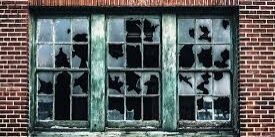
Like all crime prevention methods, no approach works in isolation, nor is 100% effective. Any policy suite can only begin to be workable when there are rigorous laws, a Judiciary that gets the balance right between crime and punishment, a well-resourced police force and council with effective by-laws as well as a proactive and responsive staff under strong leadership. Effective crime prevention requires all to work in tandem. Currently not only at the state level but also at the local level we sadly lack all the jigsaw pieces for better policing, dealing with offenders and substantively lifting the amenity of Port Phillip.
The Broken Windows Theory is not a panacea on its own for our current malaise but can offer selectively some positive lift in amenity and reduce crime. The theory used in New York City in the 80’s suggests that reducing lesser crimes like vandalism, loitering, rubbish dumping and graffiti management is best served by instigating repairs, clean up or removal of rubbish quickly. In the theory the example of broken windows being replaced quickly to avoid further windows being smashed. The theory is that by instigating remedial action quickly, there is likely to be a reduced likelihood of repeat offending. If you look at graffiti for example, when tagging starts, other taggers over the months add to the original graffiti. A quick clean up response sends a message that as a community we do not tolerate this type of behaviour and vice versa, not dealing quickly with graffiti (as an example) suggests a community that is ambivalent to anti-social behaviour.
Improving the general appearance of our neighbourhood can also have a reinforcing effect of a community expectation that we respect property and amenity and have limited tolerance for poor behaviours. This behavioural change has further benefits, in that our retail streets will lift in vibe, more resident interaction in our commercial hubs and in the case of St Kilda, halt the slow downward social spiral, which is now spreading to Carlisle Street in Balaclava.
There are however things within our orbit that we can do and make a visible difference. With a reorganisation of capacity and staffing mix, we could have an enlarged daily response crew whether it be for:
- Removing graffiti on public walls, electricity pylons or public seating,
- Replanting trees lost through vandalism,
- Agreement with business houses and property owners on our retail strips to allow on going clean-up of buildings tagged by graffiti.
- Daily clearing of dumped rubbish,
- Council issuance of clean-up order on private property littered with rubbish or graffiti.
- Extension of the cleaning contracts of major thougher fares
One of the concerns I have had as a long-time resident of St Kilda, is that many of our once extraordinary St Kilda intellectuals, writers, artists and well healed citizens have left due to the deterioration of the suburb. This is longer term problematic, as it accentuates the slide into ghetto status: – a status, that is then very hard to rehabilitate from. A vibrant community also needs an exciting mix of people and social strata alongside ensuring our public assets are well maintained.
There are many examples of neglect in the CoPP. Personally, I have complained about the clock tower not working on the Esplanade (recently fixed after a number of years), the O’Donnell fountain not operational for over a decade (and not even council ensuring the fountain lights are working at night!). The wider message it sends is a council and community that doesn’t care enough about its suburb, its history and its architectural treasures. It accentuates the perception of neglect.
I have witnessed over recent years a burgeoning bureaucracy within the City of Port Phillip Council fed by politics and the public sector union. We now have some of the highest council rate levels, largest council revenue and yet we are near the bottom of public perception in community satisfaction surveys on council performance. There is now unfortunately an inverse relationship to the amount of money vested in the council and community satisfaction on its outputs.
The council fails to meet our expectations not because of lack of money. It fails due to:
- Lack of leadership,
- A reactive instead of proactive culture,
- A very expensive and top-heavy staff structure- too many managers and not enough on the ground workforce and
- A politicised culture where both a number of councillors and senior management from an “organisational chart” perspective have a dotted line straight through to Spring Street – meaning potentially a lack of independence and questioned governance.
Council also has a listening problem. The recent umbrellas installed in Acland Street and the subsequent public uproar on Facebook is but one of a myriad of examples of council having “deaf ears”. I have heard so many residents over the years requesting for the greening of Acland Street and yet what we get is some small pockets of synthetic grass and what looks like umbrellas purchased straight out of an Etsy online catalogue. Even the ever practical Marry Poppins would roll her eyes at these umbrellas!
Council needs to rediscover its reason for being, start listening without predetermined agendas and as stated, build an army of clean-up crews to get the basics sorted within our city walls. Let’s start with what council can do – start repairing the Broken Windows – And maybe community surveys will lift from rock bottom of where they sadly sit today.
Port Phillip Matters
Our local Port Phillip Matters newspaper keeps you up to date on community sports, school events, local personalities, local pets, with real community spirit.
Recent Comments