

Port Phillip Matters
Council Moves Forward in Community Safety Roundtable Outcomes and Cr Hardy’s Camping By-law Motion now in Community Consultation Phase
Author: Rod Mitchell
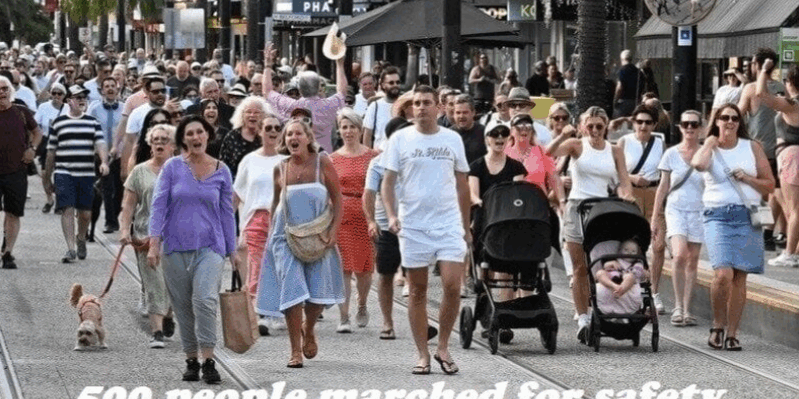
The Wednesday 21 May Council meeting saw the passage of both the Roundtable recommendations and Cr Hardy’s proposed change to local laws around camping on council land move to a five-week consultation phase.
There are two important points surrounding Rod Hardy’s bylaw proposal.
- Adoption of the proposed new camping laws should be seen as complimentary to the recommendations of the Roundtable. Without the local law amendments, the Roundtable recommendations will fail.
- The proposal supports and works in tandem with the recommendations to the Roundtable by Victoria police.
The meeting attracted a large number of speakers and while the Roundtable recommendations were warmly endorsed, Cr Hardy’s motion was contested in what can be described as animosity from those opposed to the recommendation.
It was fair to say that Mayor Crawford failed to keep some of the behaviours of the objectors to the motion in line and the mood among many was that she was showing tacit support toward the agitators against change during the meeting.
Cr Rod Hardy’s Proposed Changes to Local Laws around Camping on Council Land
Cr Hardy’s motion seeks to remove the exemption from current bylaws that allow homeless people and those with complex needs to camp on council land. Currently only two municipalities in Victoria, exempt the homeless from their bylaws in regard to camping on council land. Cr Hardy’s motion if enacted will create greater uniformity with other councils in regard to bylaws on camping.
The motion does not:
- criminalise the homeless,
- fine the homeless,
- breach Victorian Human Rights legislation, and
- removal of encampments can only be enacted through implementation of protocols and safeguards.
The argument that changes to the bylaws in effect mean fining of the homeless is perhaps the greatest furphy used by opponents of the motion. Mayor Crawford has changed her position a number of times on fining, from:
“Can I be very clear that the Port Phillip Councillors have not voted to fine homeless people, nor have they voted to criminalise homelessness.” And
then on the night of the Council meeting suggesting that the homeless could be fined and the next day reversing her position again stating:
“The potential change does not involve fining them.”
Cr Beti Jay, a frank speaking councillor, shredded the “fining” argument making it very clear you cannot fine anyone unless they have an address. Clearly if a homeless person has an address to go to, they by definition are not homeless.
Defining Homelessness
Cr Jay ‘s comment also raises a key point in terms of defining homelessness. Of the 40-50 rough sleepers in any one night in the CoPP, they are not all by definition homeless: Some of this subset:
- are provided with accommodation but do not want to be in accommodation.
- have provided for accommodation outside the CoPP but travel into the CoPP,
- have been removed from boarding houses or emergency accommodation because of disruptive behaviour or substance abuse.
Importantly, which often gets overlooked in this discussion is that the genuine homeless often get swept up in the same brush with drug users who use makeshift camps to engage in nefarious activities. These activities heighten risk for all.
The universal feeling at the council meeting viewed sleeping rough as not safe and spoke of the need for a commitment to working with social services to provide appropriate support and pathways to housing. What most opponents to the bylaw motion however failed to grasp was that Cr Hardy’s motion should be seen as complimentary to the round table outcomes.
The changes to the bylaws also seem to have conjured up a view that there will be some large sweep of our retail streets of the rough sleepers in a callous disregard to human dignity and their basic rights. This too is a fallacy. The changes to the bylaws would be cocooned in protocols and initial use of outreach services. Similarly, the opponents of this motion fail to give credit to council by-law officers and executives in sensible discretion in application of the proposed by-law changes.
Police Support for Changes to Local Laws
Sadly, in voting against the motion, the three Councillors were also voting against police recommendations that are very precise. The police live daily with the issues associated with rough sleepers and they are in a position to know what will assist them in ensuring safer streets. As stated in part in their letter to the Community Safety Roundtable:
“The existing provisions and exemptions within the local laws, in particular Local Law 42, appears to enable growth in encampments and a degree of permanency in some locations.” AND
“Amendments to the local laws as described are strongly recommended” AND
With the amendments:
“Enforcement is undertaken by Local Laws Officers and the Neighbourhood Policing Team to dismantle encampments occupied by those who have rejected support or whom have been deemed not requiring support”
Mayor Crawford Wrong on Alcohol Restriction By- Law Change Outcome Analogy
Mayor Crawford in attempting to stop the proposed camping law amendments from going to public consultation reminisced of a bylaw change some seven years ago on prohibition on alcohol consumption on our retail strips and noted without substantive proof that the prohibition did not work.
As one local resident stated in response on Facebook
“For over six months, this law was actively and effectively enforced by police and local law officers. It became a vital tool in reclaiming Acland Plaza—a space that had previously fallen into chaos. To say it “doesn’t work” ignores the real results we achieved and undermines the dedication of those who were on the ground every day restoring order. Acland Plaza is far from perfect—but without the coordinated efforts of police, council officers, and support services, it would have remained a no-go zone. These efforts didn’t solve everything overnight, but they pushed back against disorder in a way that hadn’t been done before.
Councillor Buckingham Misses the Point
Cr Buckingham used the “crystal ball” technique that the motion would not be effective if enacted after consultation. There is no substantive proof to back her claim and disappointing was her narrow vision to not see further than the just the Roundtable outcomes. She could have sought further consultation including discussions on the use of additional tools like changes to the by laws to improve public safety and how they would complement the Roundtable recommendations.
Cr Buckingham moved an amendment to the Roundtable outcomes to have some of the recommendations from the Roundtable report to commence even before the community consultation period is undertaken and completed. While this was accepted by the Council and voted unanimously, it clearly fell short in terms of process. To then shut down any attempt to at least look at Cr Hardys bylaw amendment through consultation shows a mindset that has disregard for rigourous process, dismissive of ratepayers and resident’s real concerns and political posturing.
Community Consultation on By Law Change(s) Motion Passed
The motion to take the proposed bylaw changes to community consultation was passed by six councillors to three. Refreshing was the fact that many of the councillors who supported the motion stated that while they were not fully clear on where the camping law changes should land, they however showed the common sense and inquisitiveness to seek answers and further dialogue with the broader community.
Three Councillors Opposed to Changes to Local Laws and Public Consultation
These three councillors showed no hesitation in trying to shut down community consultation on the proposed by-laws changes, irrespective of the large turn out on Wednesday in support of the motion. The contempt for community input was well on show.
Two of the councillors who voted no to the motion are political aligned to the State Government which is well known for its soft on crime advocacy in talk and in policy. It is conjecture whether these two councillors were operating independently or just acting as foot soldiers to Spring Street. Once again this supports the RoPP position that alignment with community in decision making is optimised when politics is removed from council decision making and out of the hands of political parties and their members.
At a time where surveys give low performance ratings to the City of Port Phillip on community consultation, we would have thought that these three councillors would have been more attuned to this ongoing community dissatisfaction.
Public Consultation Now Open
The City of Port Phillip has now opened up for community comment on the Community Safety Roundtable recommendations and also amendments to local laws surrounding encampments.
The Ratepayers of Port Phillip support the Roundtable recommendations and importantly Cr Hardys Camping exemptions to the current bylaws. It is clear that without those changes the Roundtable recommendations will fail in practice.
You can access more information or have your say on:
https://haveyoursay.portphillip.vic.gov.au/feel-safe-be-safe?mc_cid=ac7402f5e5&mc_eid=097b7ecd12
Port Phillip Matters
Our local Port Phillip Matters newspaper keeps you up to date on community sports, school events, local personalities, local pets, with real community spirit.
Recent Comments